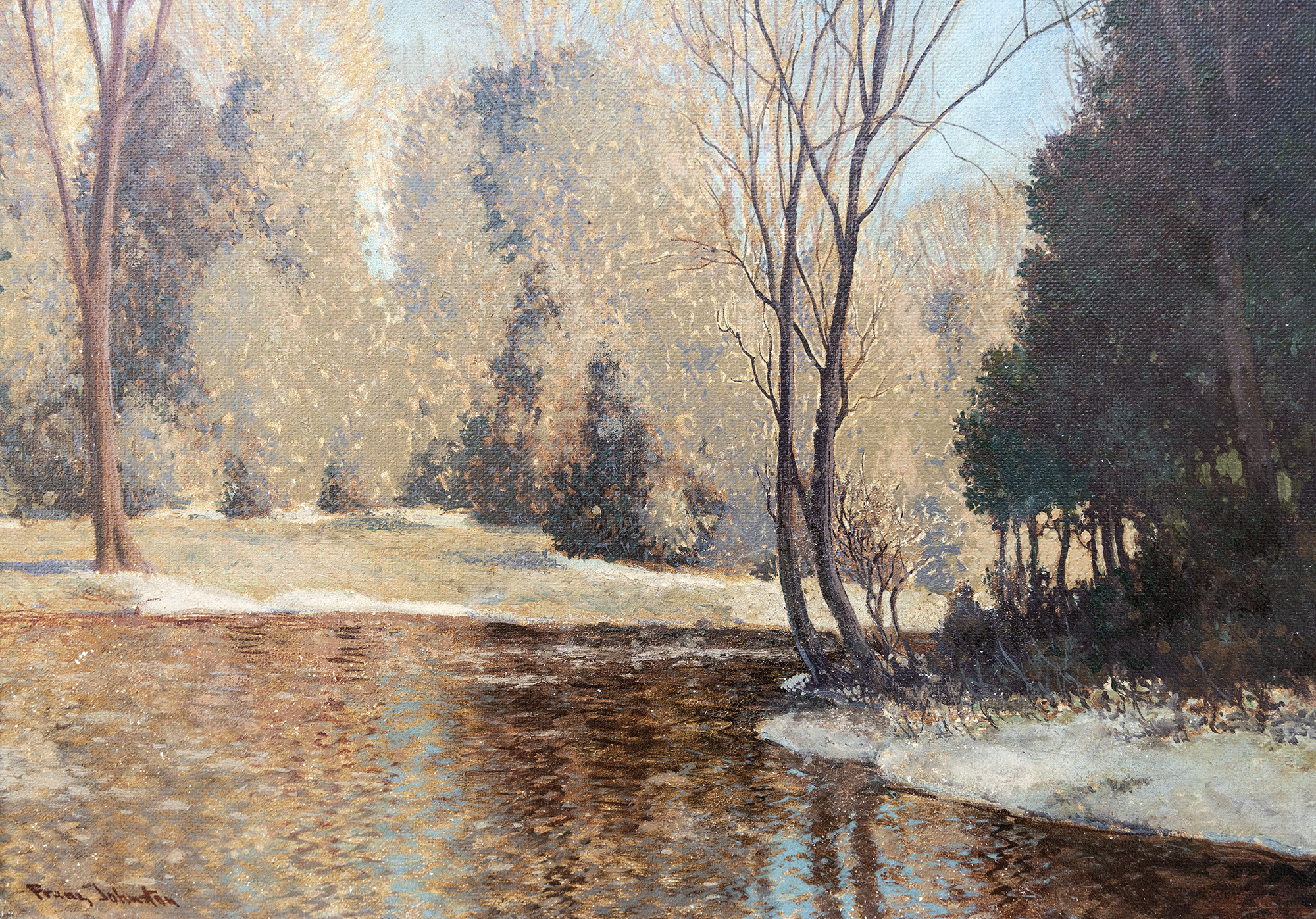
The Blue Eyes of Spring
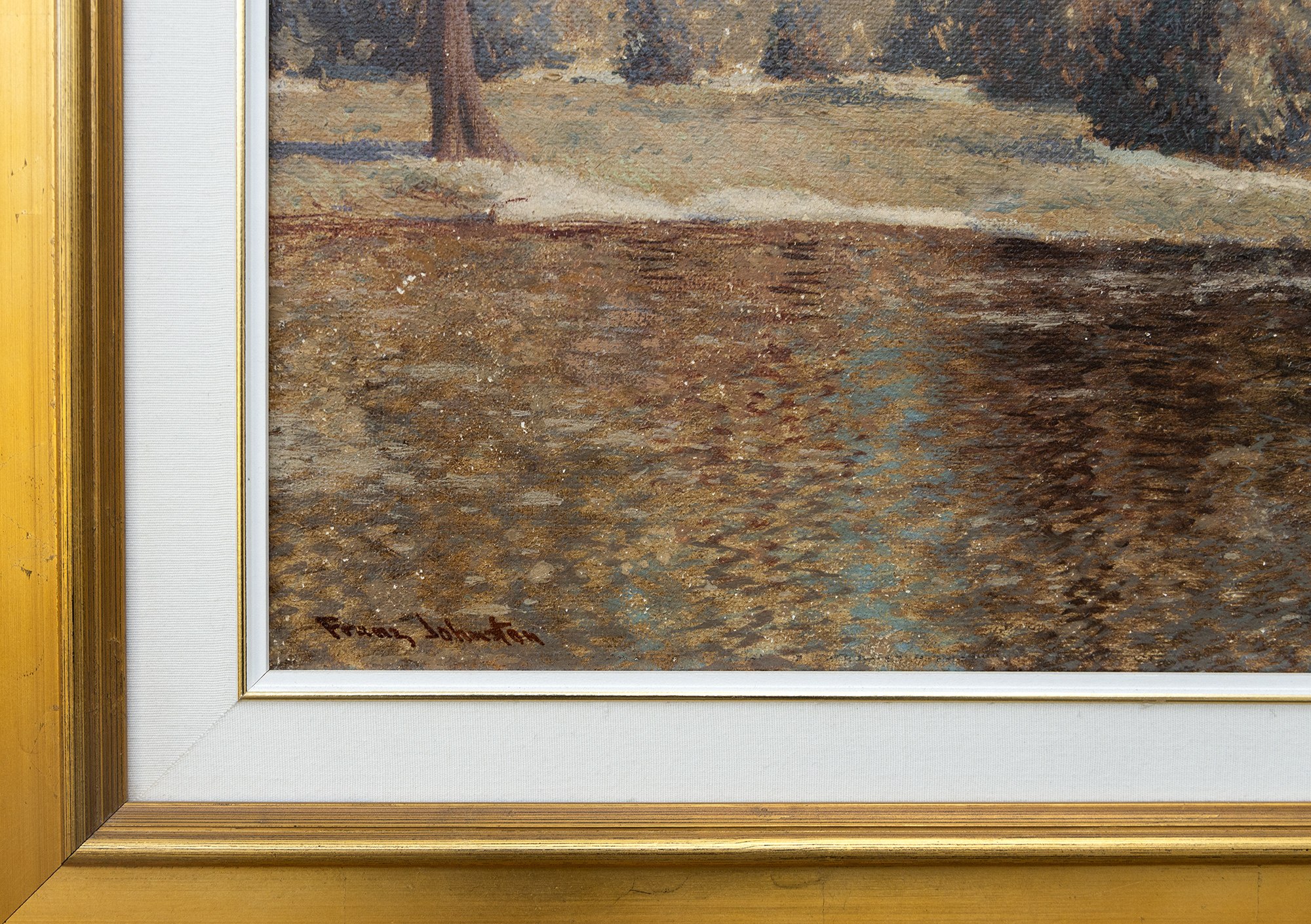
More Works By Frank (Franz) Johnston Oil on Panel 1934
19.5 × 23.5 in
49.53 × 59.69 cm
FRAMED
29 × 33 in
73.66 × 83.82 cm

 Copy Link
 Share by Email
About The Blue Eyes of Spring
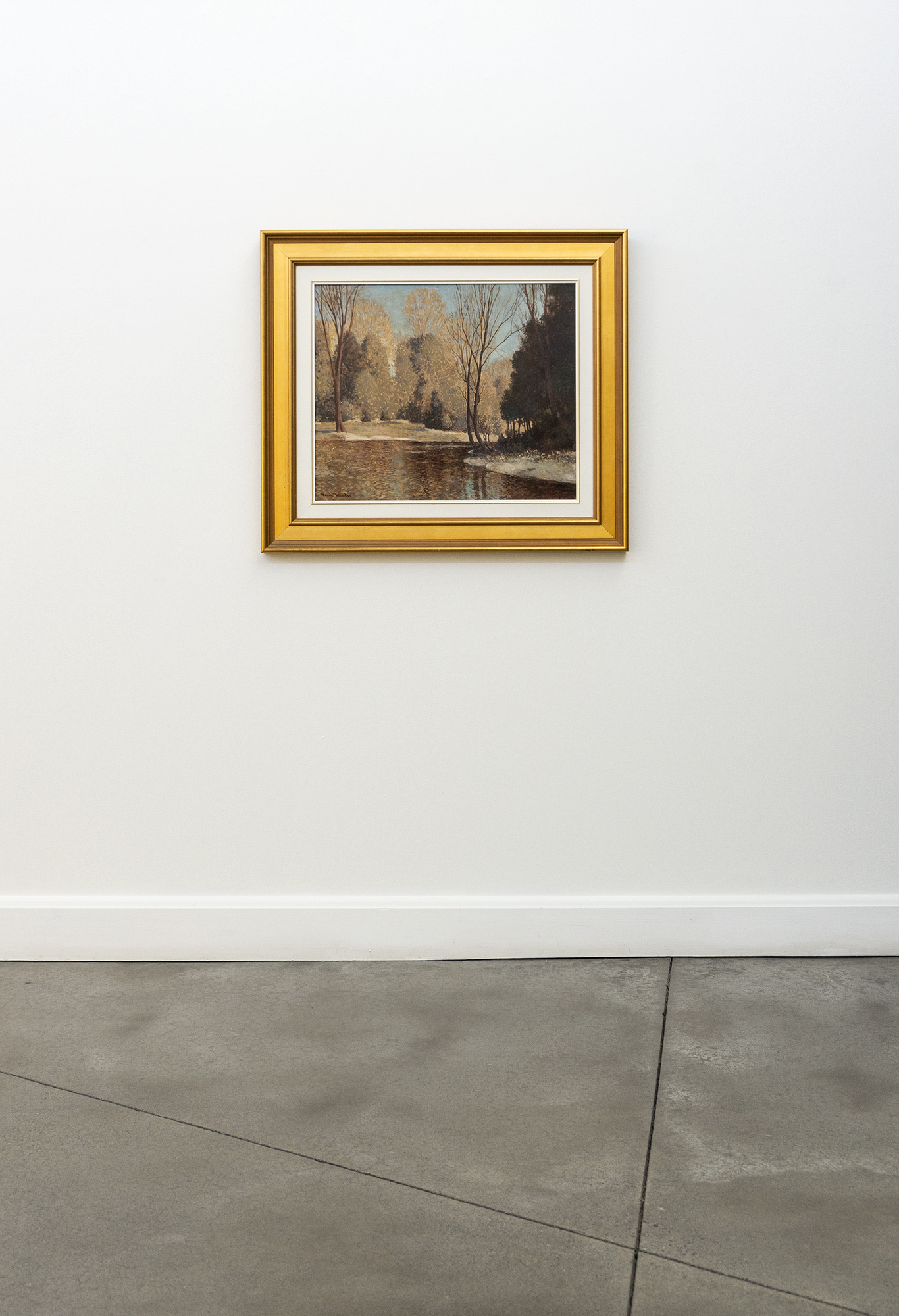
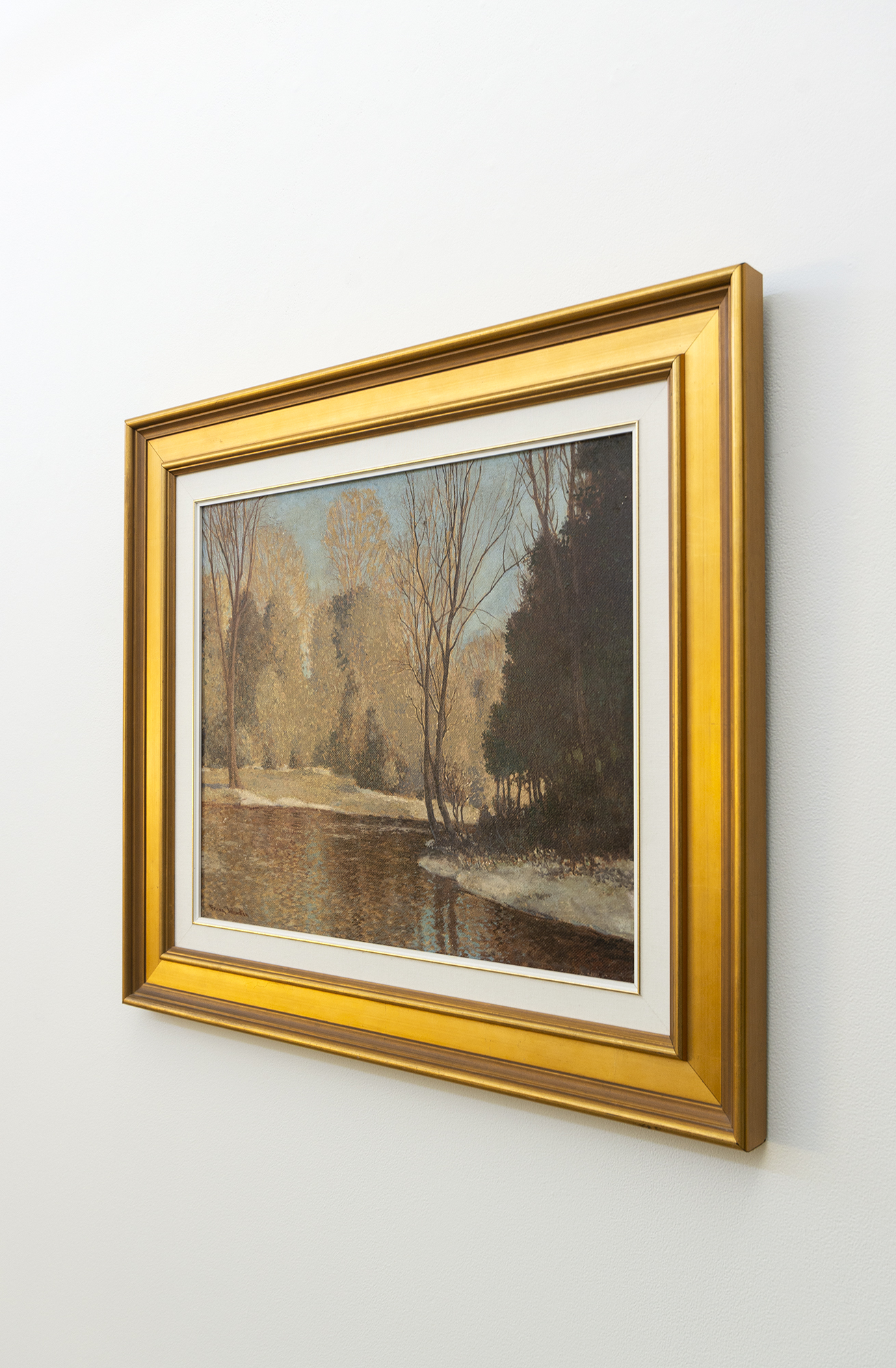
This landscape oil painting is by Group of Seven member Frank Johnston.They are known the world over as Canada’s most famous landscape artists and Frank Johnston was one of the founding members of the Group of Seven. His paintings have historically been the most popular among both private and public collections including the National Gallery of Canada. Johnston was also the most prolific and financially successful of his fellow artists who often gathered to paint together en plein air capturing the clear lakes, hills, rocky outcrops and lush forests of the northern wilderness. He received early praise for his ability to faithfully depict the interplay of light, colour and patterns in the woods.
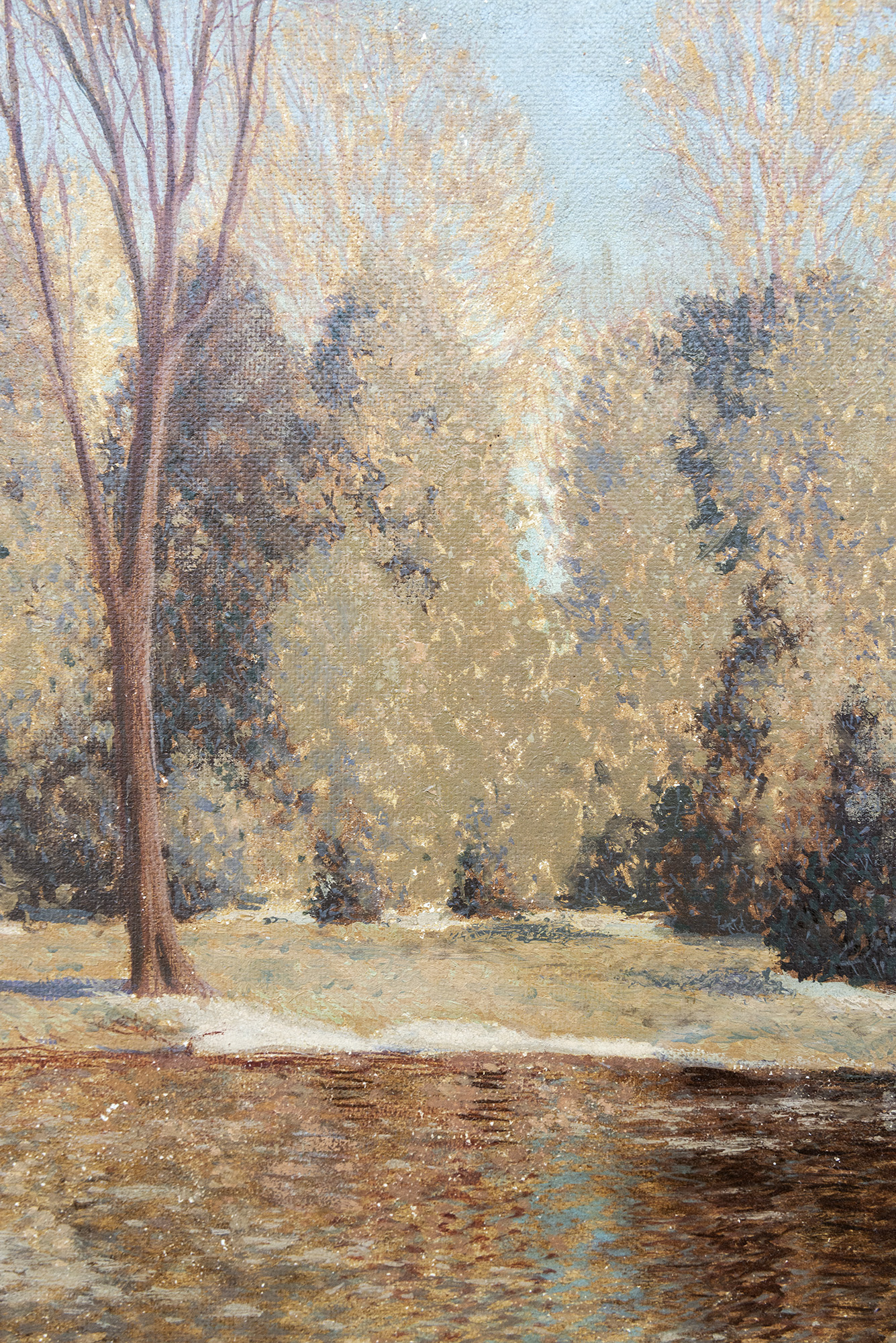
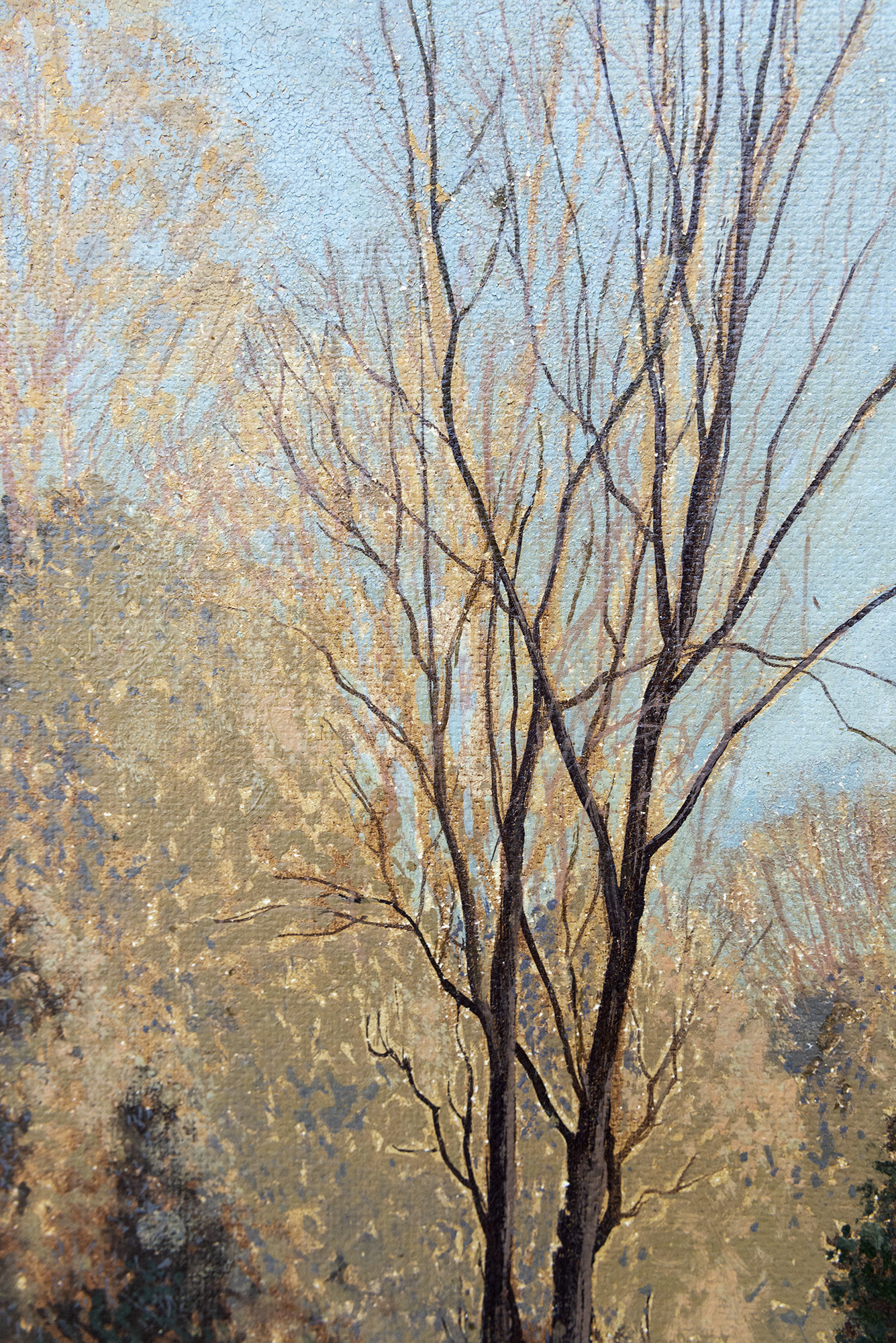
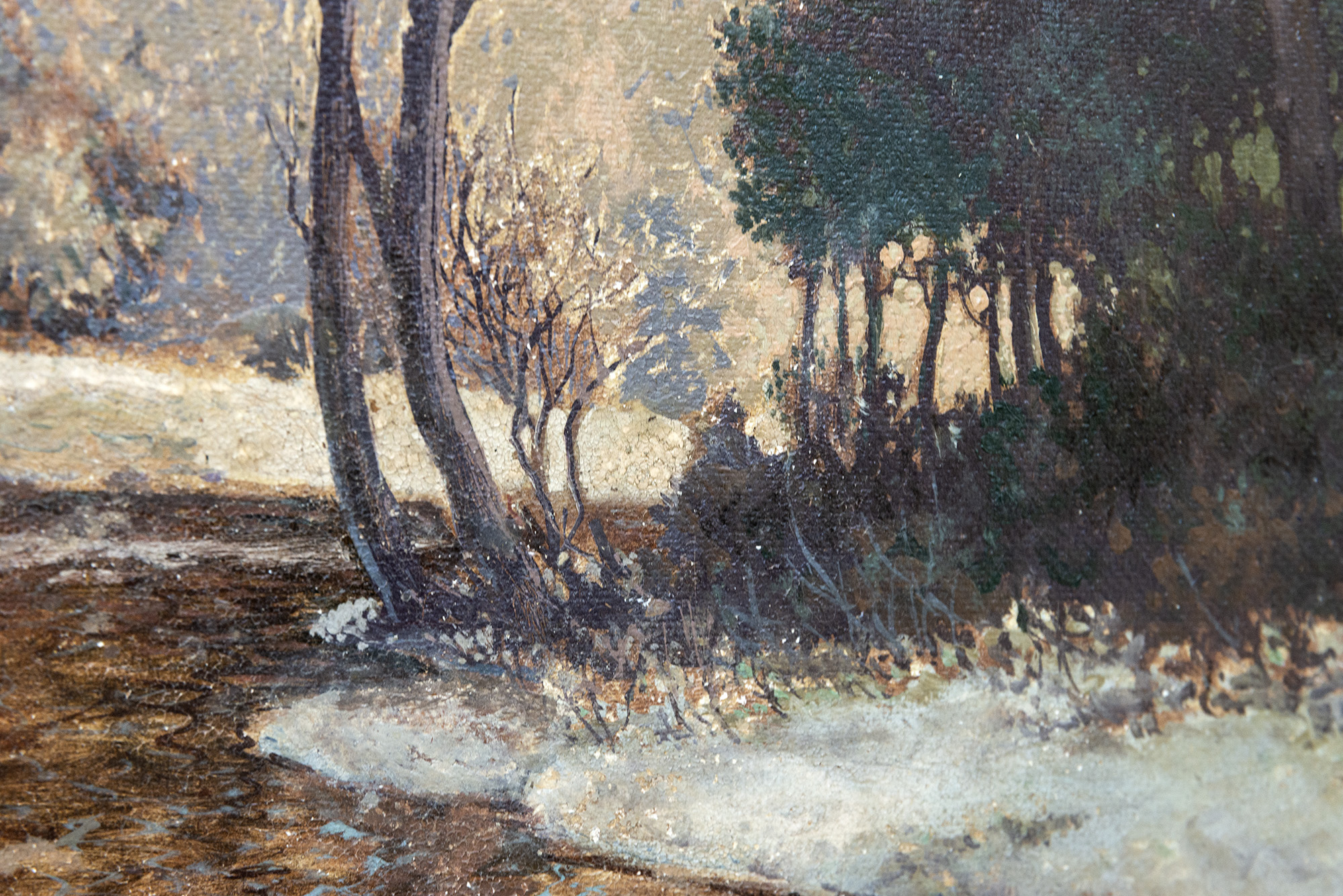
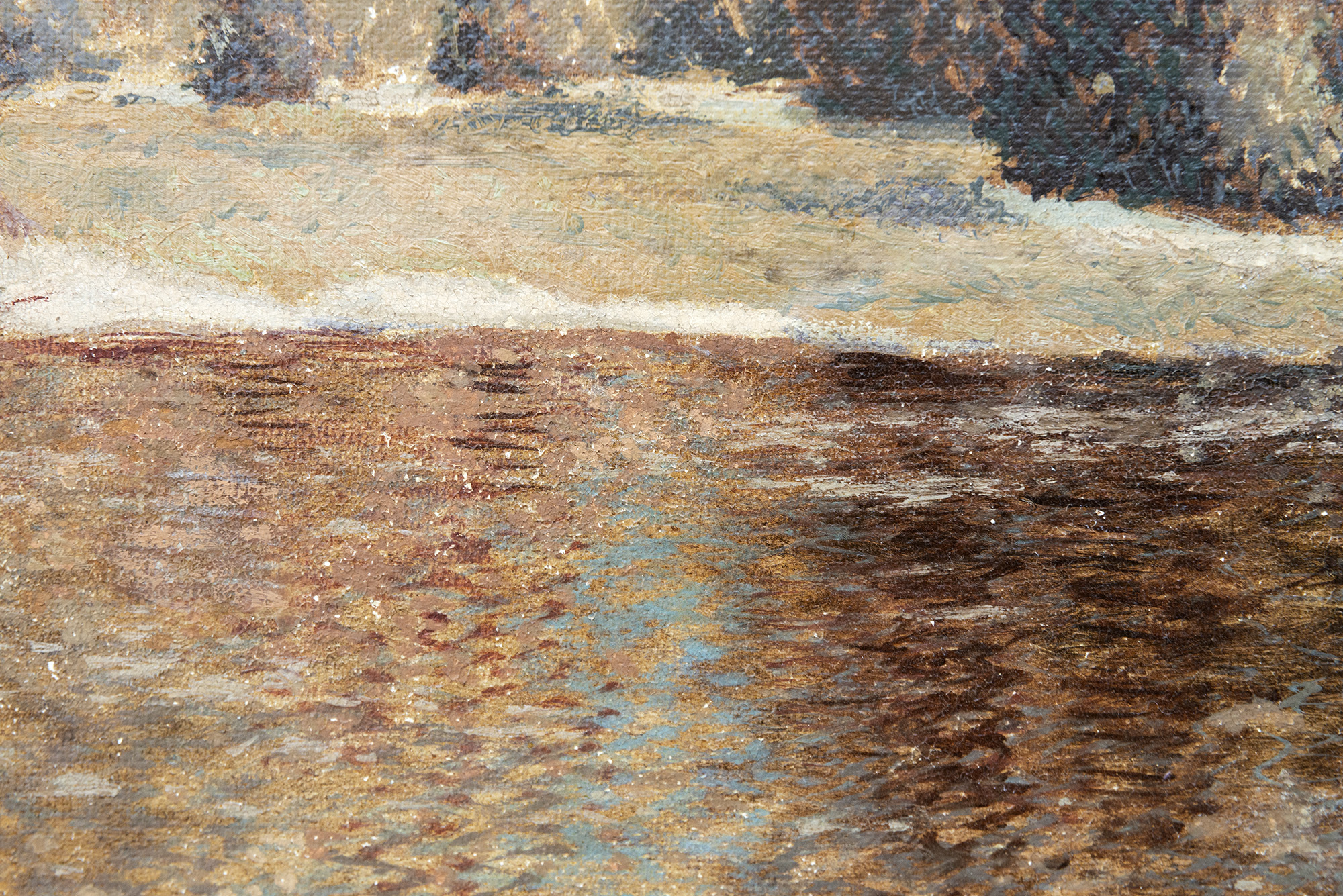
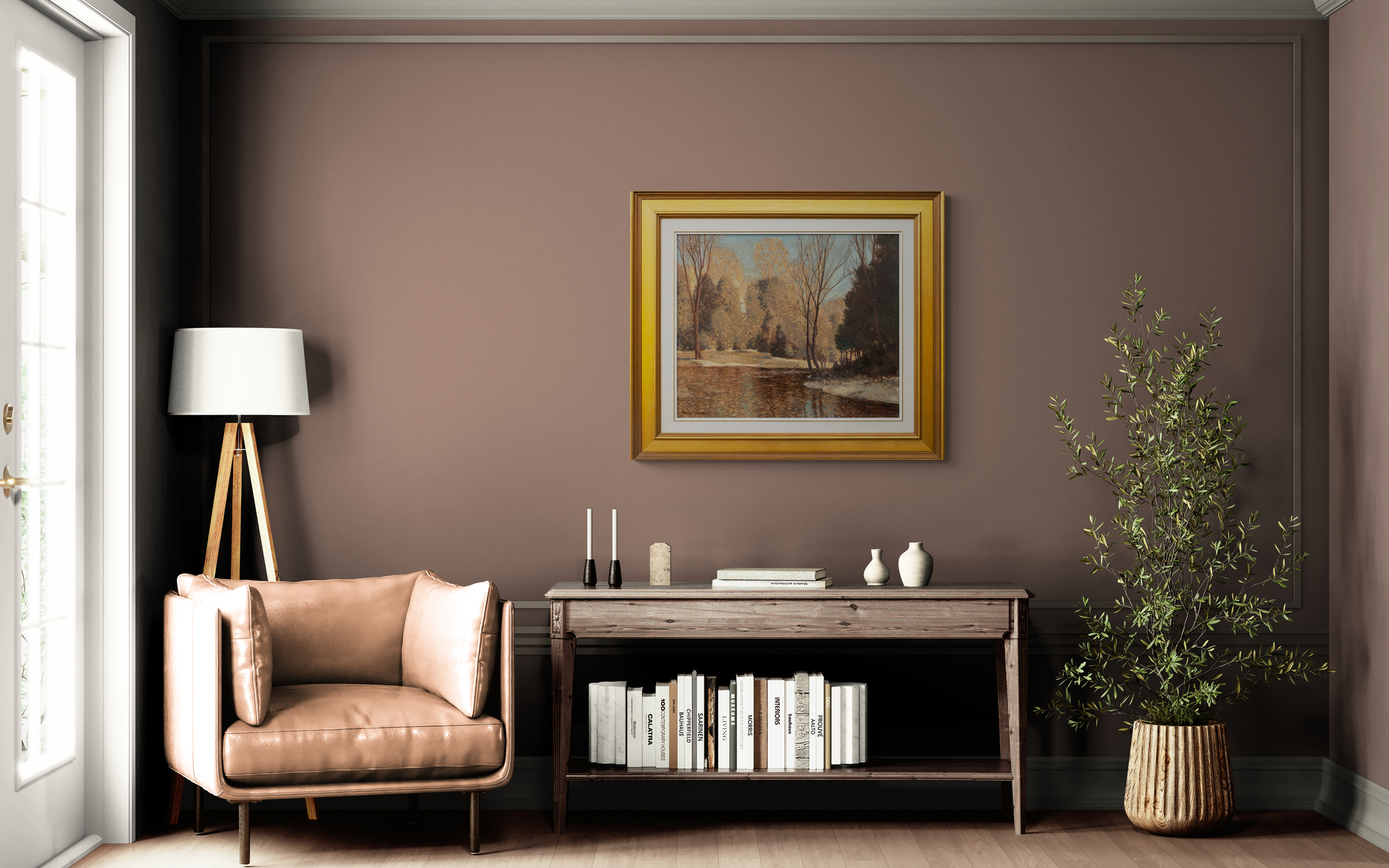
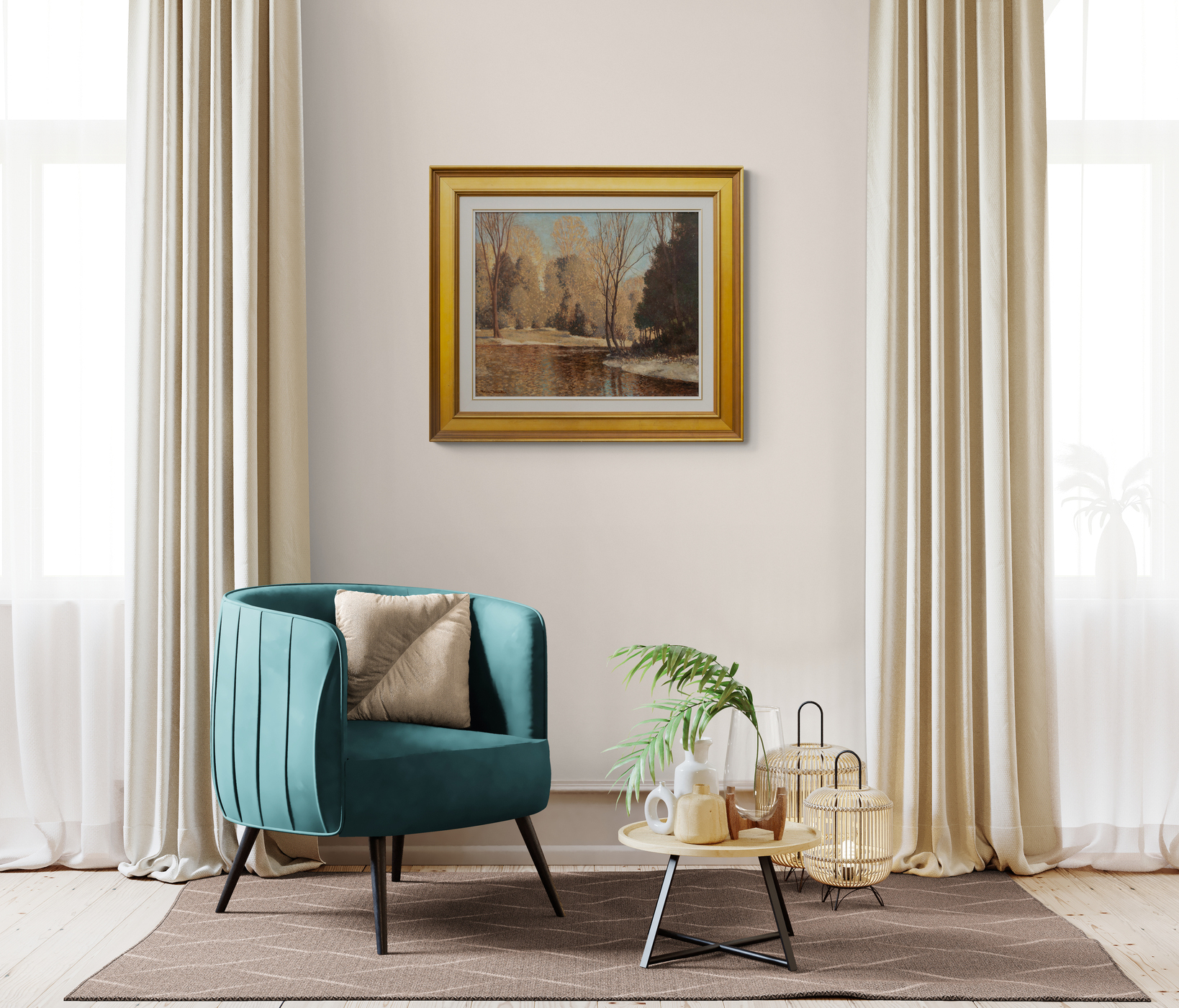
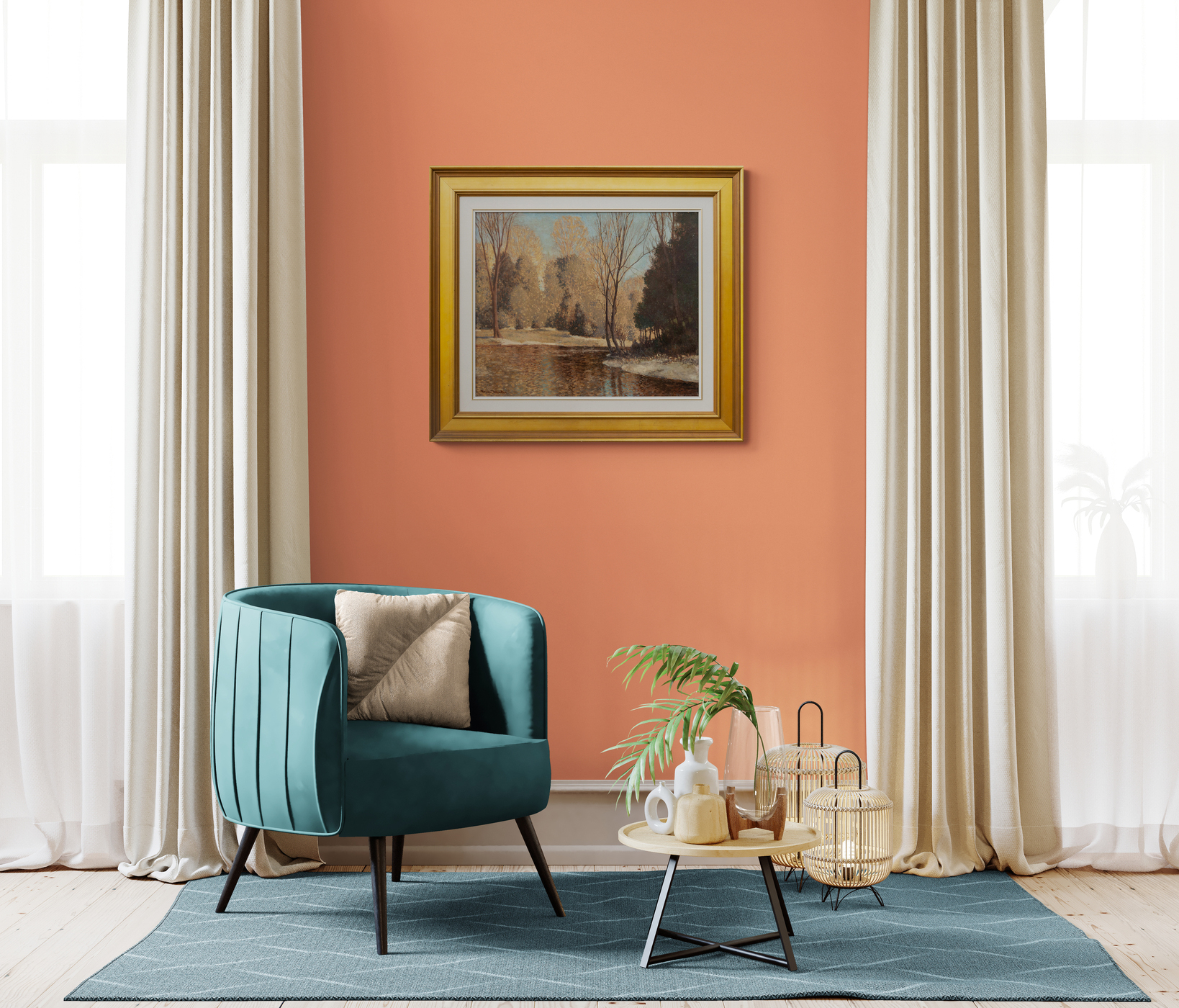
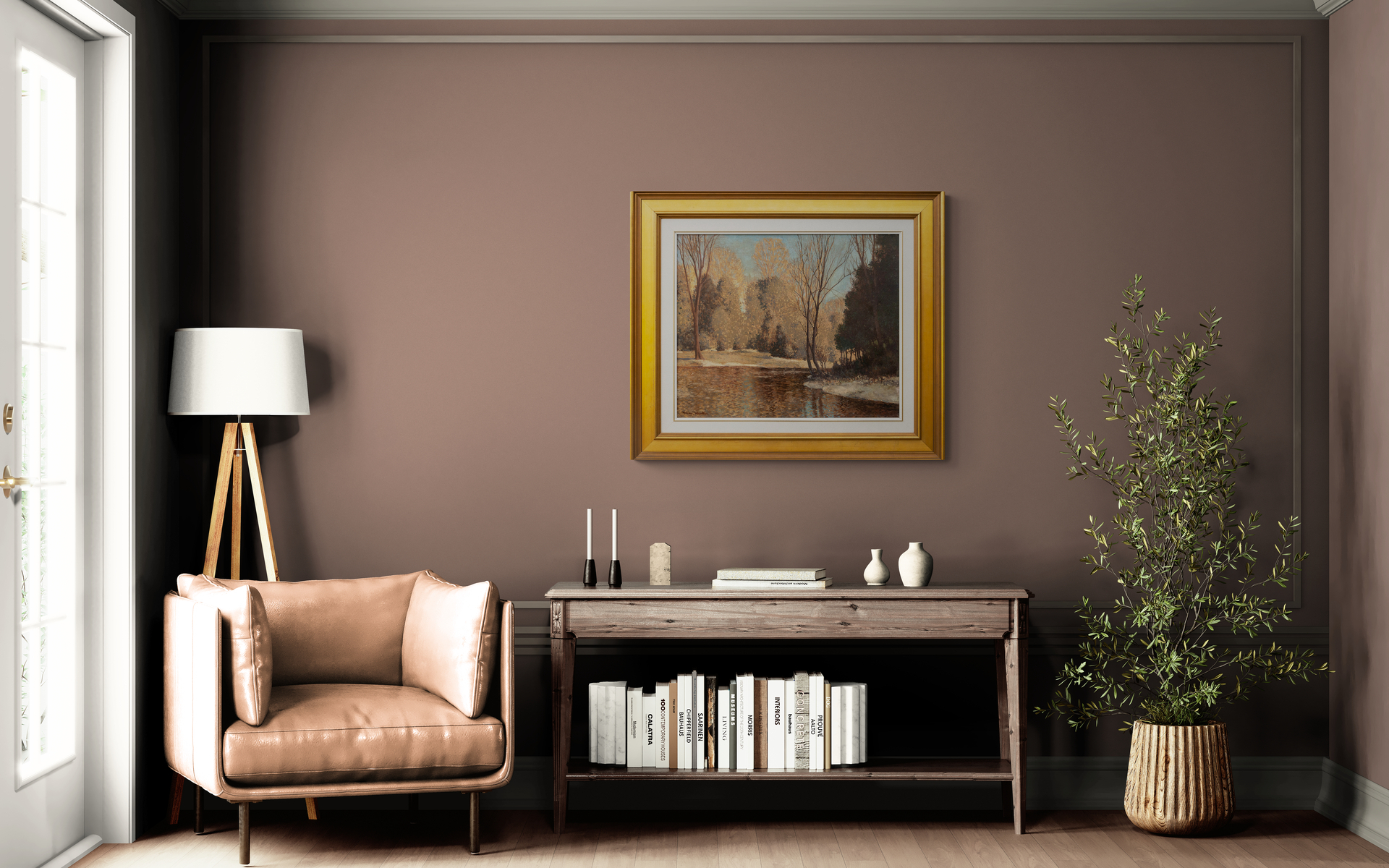
This beautiful painting captures the peace of the countryside in springtime as a river meanders past fir trees and bare deciduous trees reflected in the water. Rendered in an earthy palette of browns, golden yellows and dark green, the mood is contemplative. Flecks of blue appear in the water—as blue as the sky that frames the top of the scene.
"It (wilderness trips) took us out into the open air to look at Canadian landscape as distinct from European landscape. It necessarily meant that each was free to look at the landscape which attracted him..." Frank Johnston
Francis Hans Johnston, known as Franz or Frank was born in Toronto in June of 1888. As a young man he apprenticed as a jewelry designer in Toronto and studied art in the evening at the Central Technical School and the Ontario College of Art. He supported himself during this time working as a commercial artist and met future Group of Seven members J.E.H. MacDonald, Arthur Lismer, and Franklin Carmichael at one firm. He furthered his artistic studies at the Pennsylvania Academy of Fine Art and worked at a New York design firm before returning to Toronto in 1915. During the First World War, Johnston was commissioned to paint the troops for the Canadian War Memorials Fund. He took his first of many trips In the late summer of 1918 to the wilderness near Sault Ste. Marie with artists Lawren Harris, MacDonald and art patron Dr. James MacCallum. In 1920, the Group of Seven was born and exhibited as a group for the first time at the Grange in Toronto.
In 1921 he moved to Winnipeg to teach art and returning to Toronto in 1924 also taught at the Ontario College of Art, the same year he ended his association with the Group of Seven. After several months sketching and painting the landscape and indigenous people in the NWT, he set up a studio in the village of Wyebridge, Ontario. Johnston continued to paint northern Ontario and Quebec until his death in 1949. He is buried alongside several of his fellow Group of Seven members at the McMichael Canadian Art Collection in Kleinburg, Ontario.