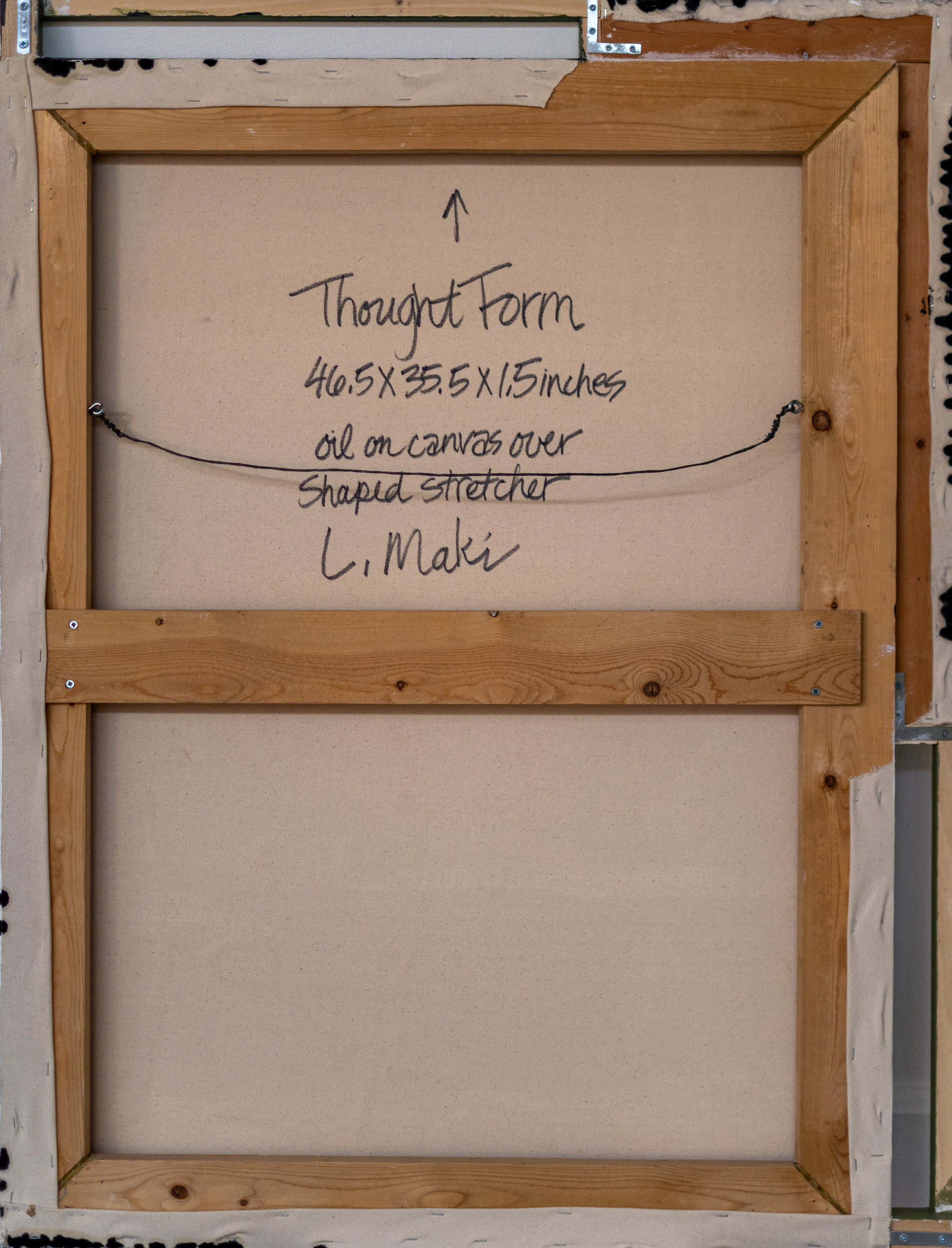
Thought Form
More Works By Lucy Maki Oil on Wood and Canvas 2020
46.5 × 36.5 in
118.11 × 92.71 cm
$8,000

 Copy Link
 Share by Email
About Thought Form
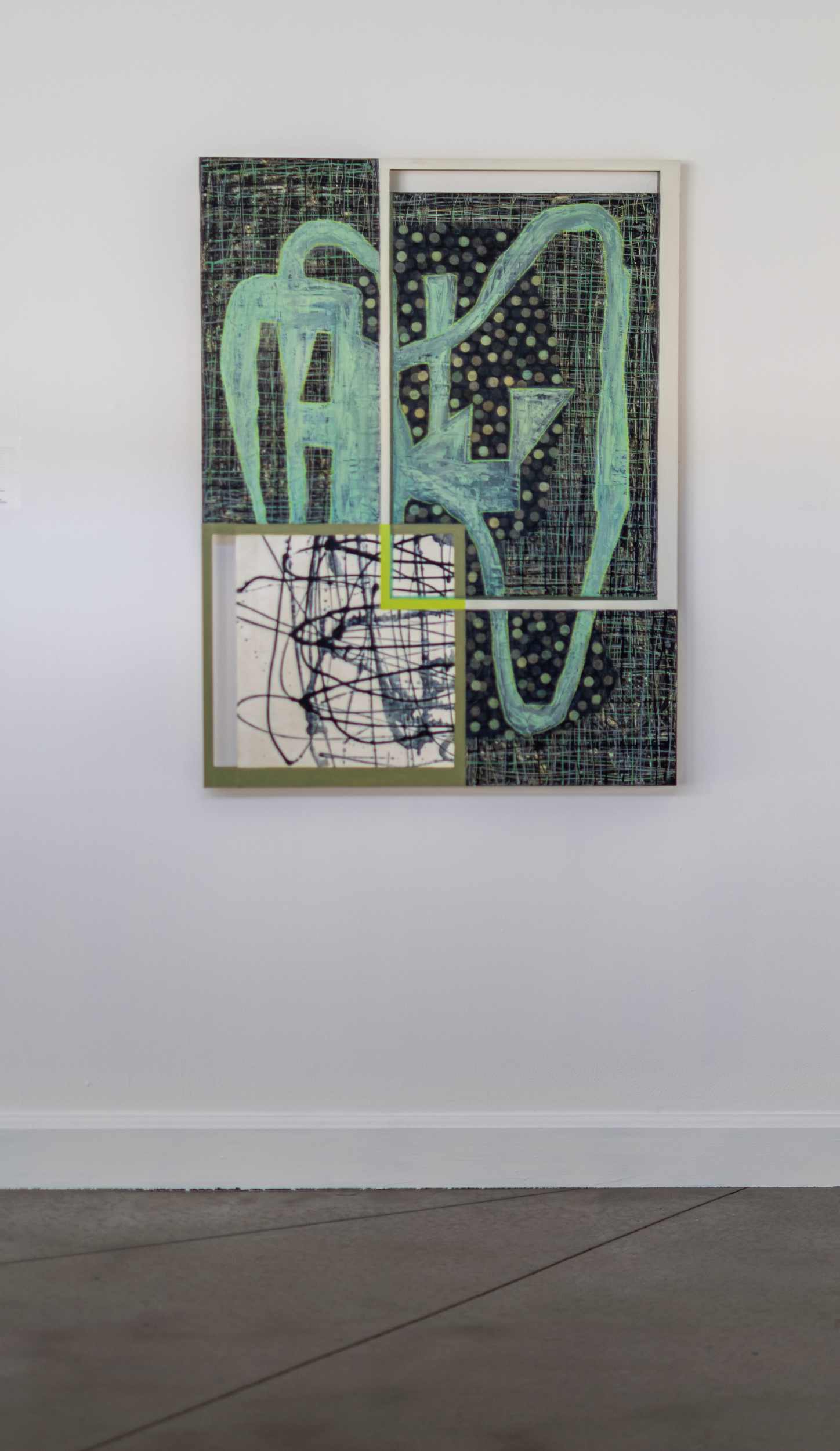
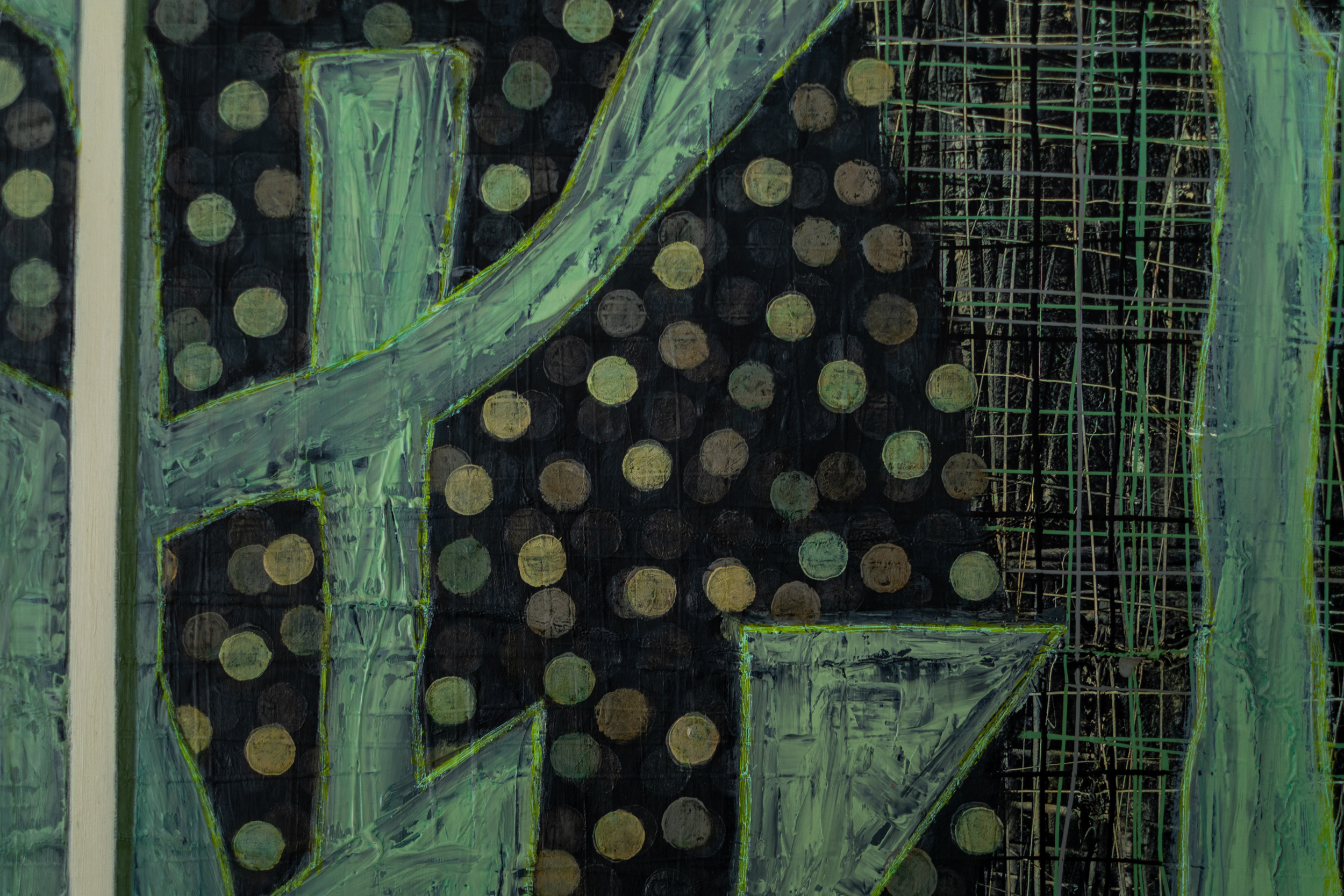
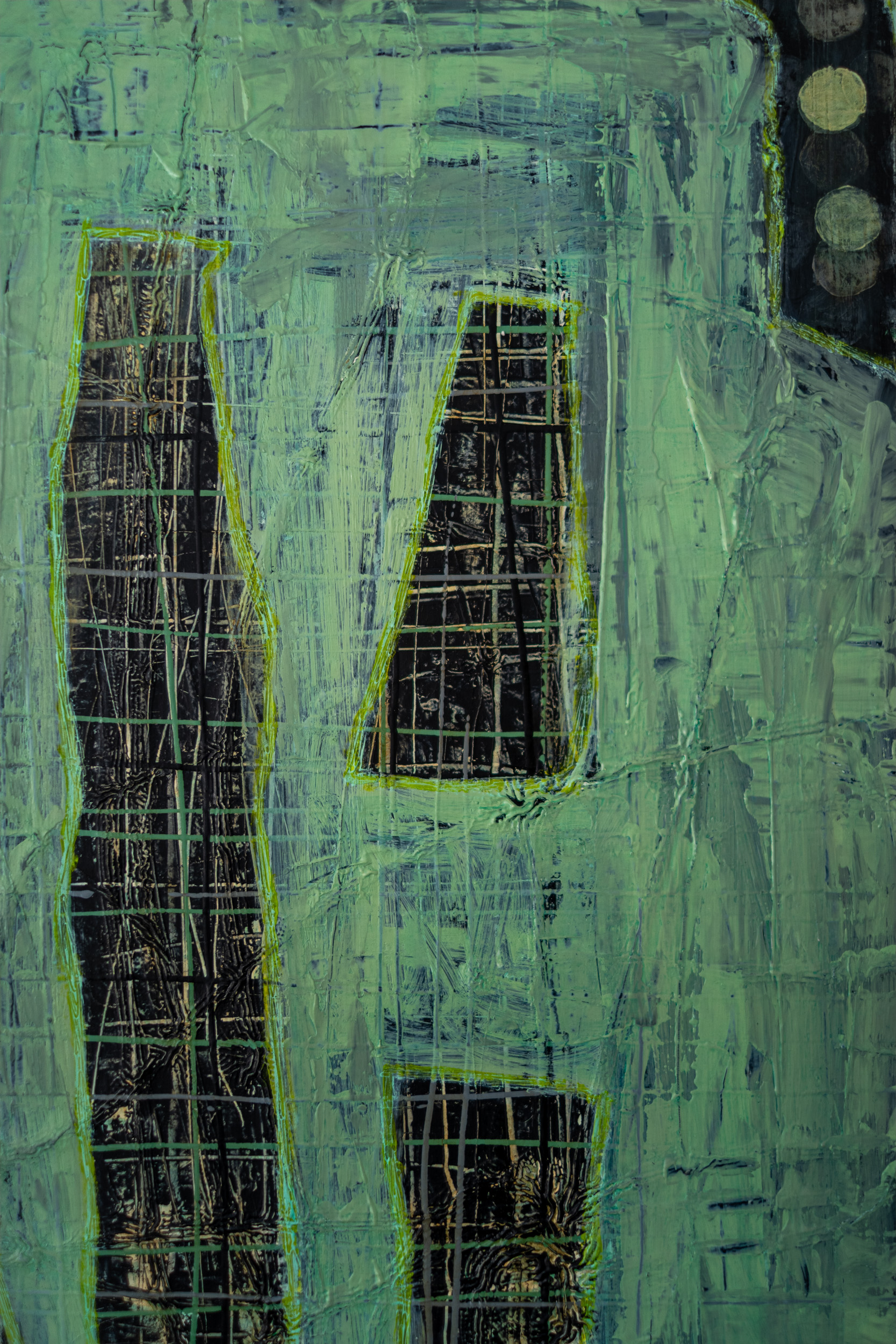
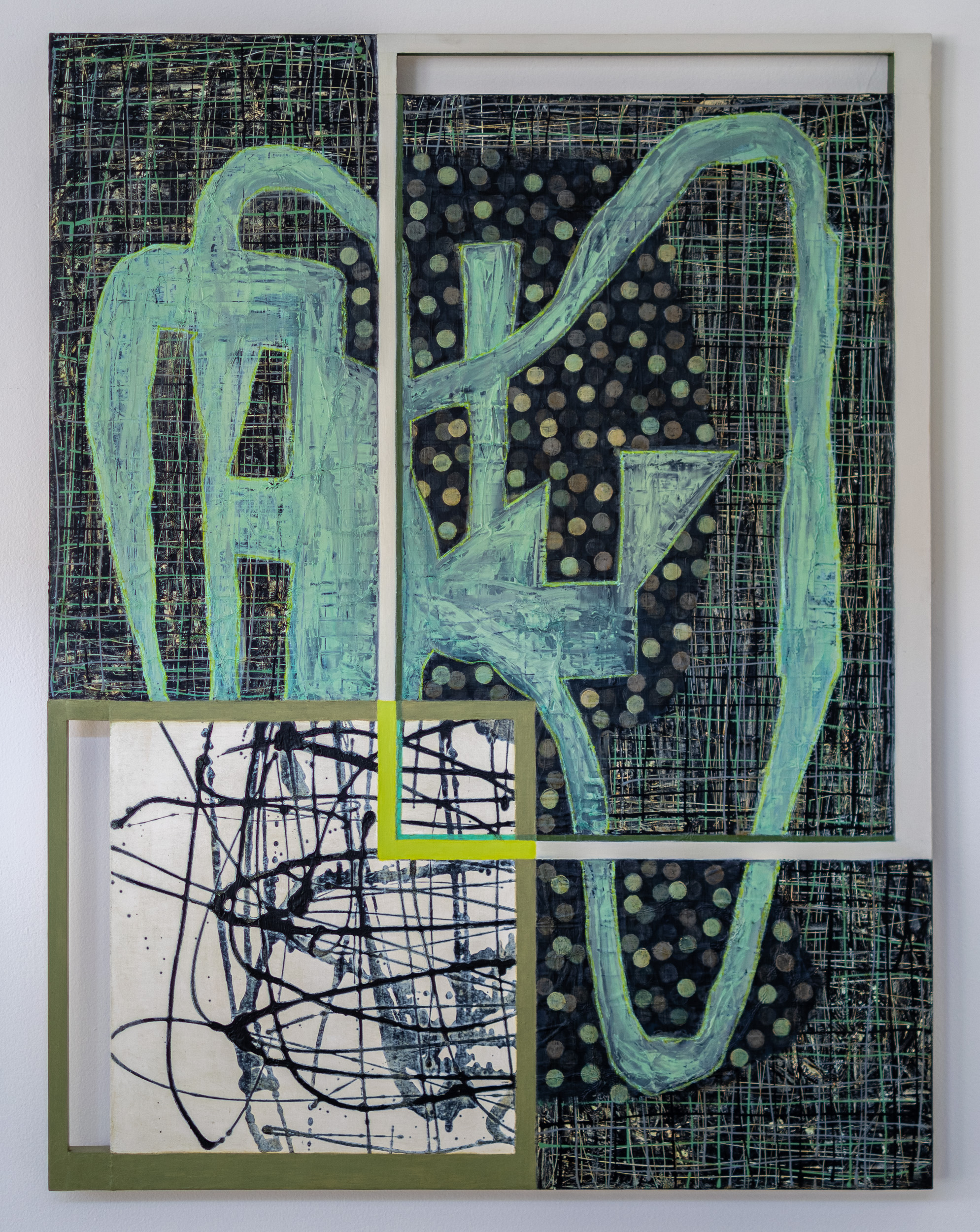
This contemporary abstract mixed media composition consists of geometric and expressive shapes in teal and black.The eclectic, wholly original work of Lucy Maki has been exhibited internationally.
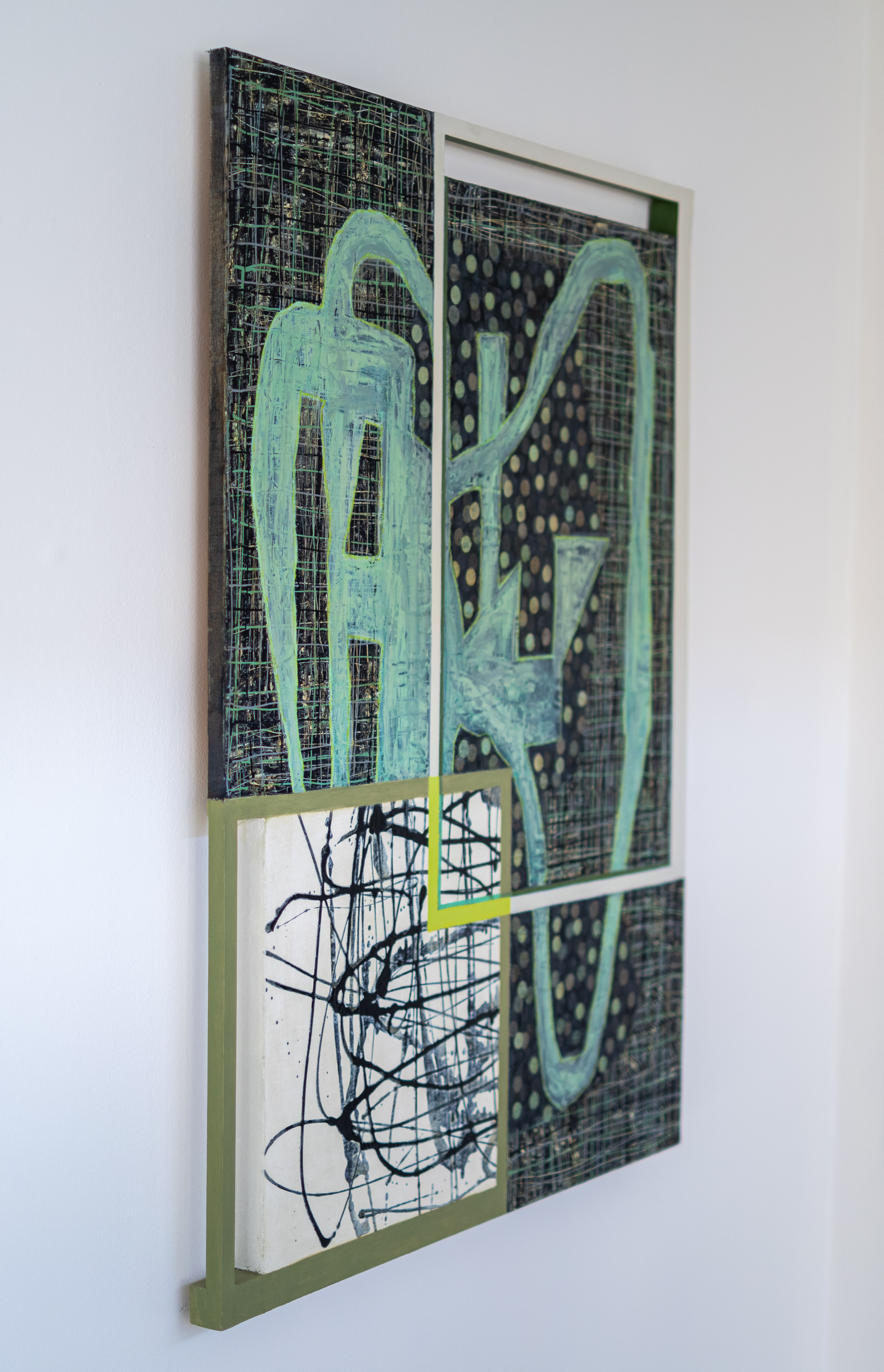
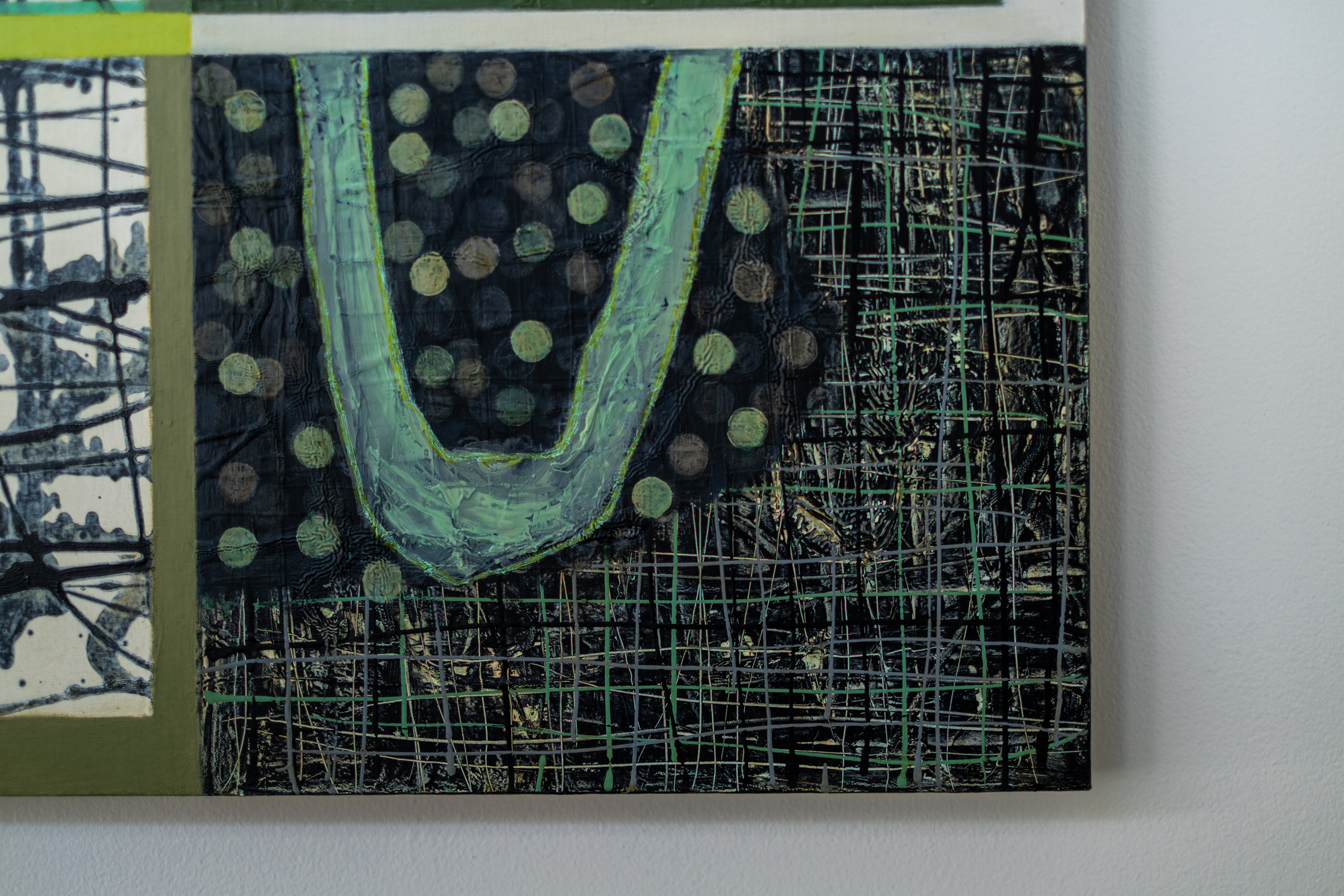
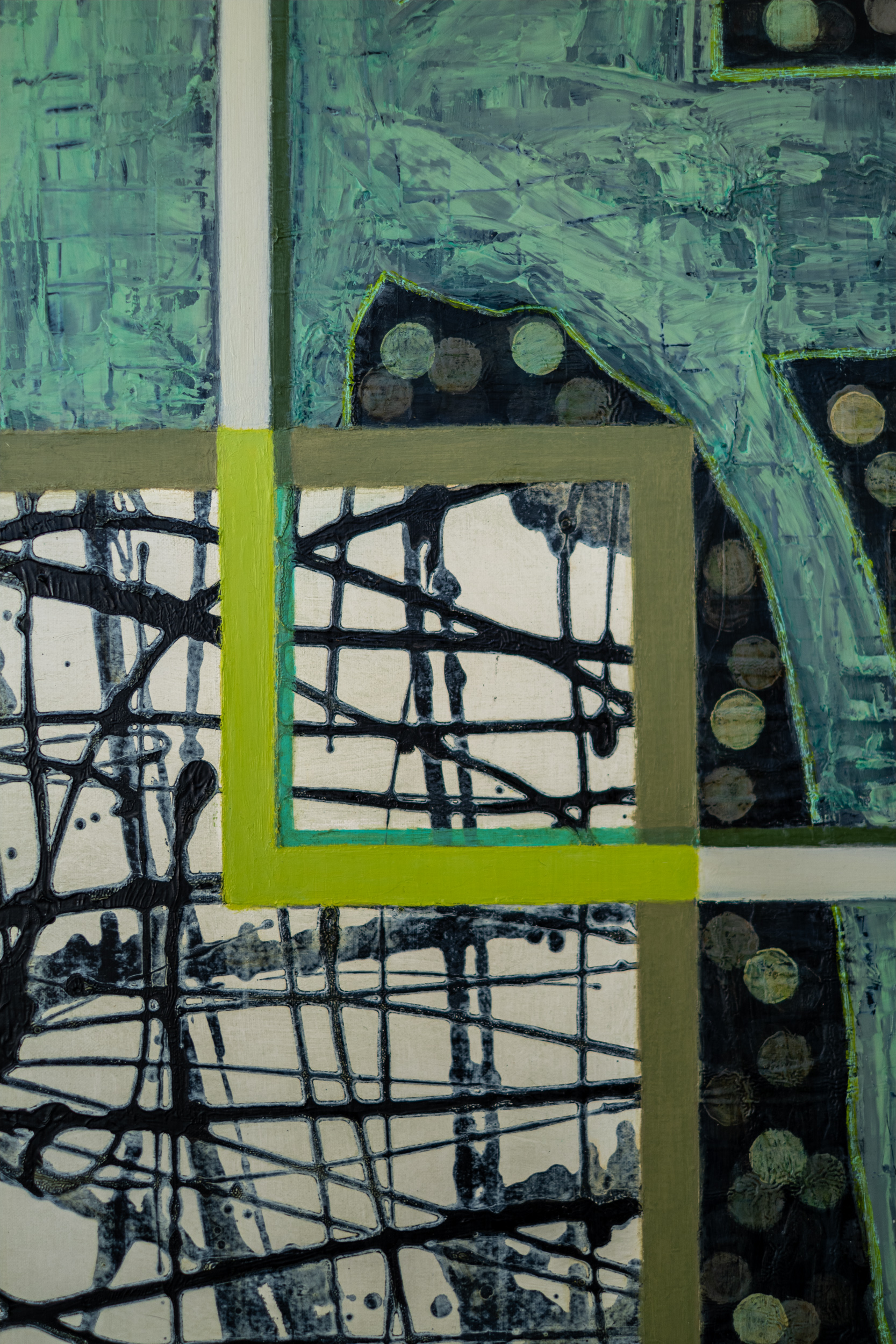
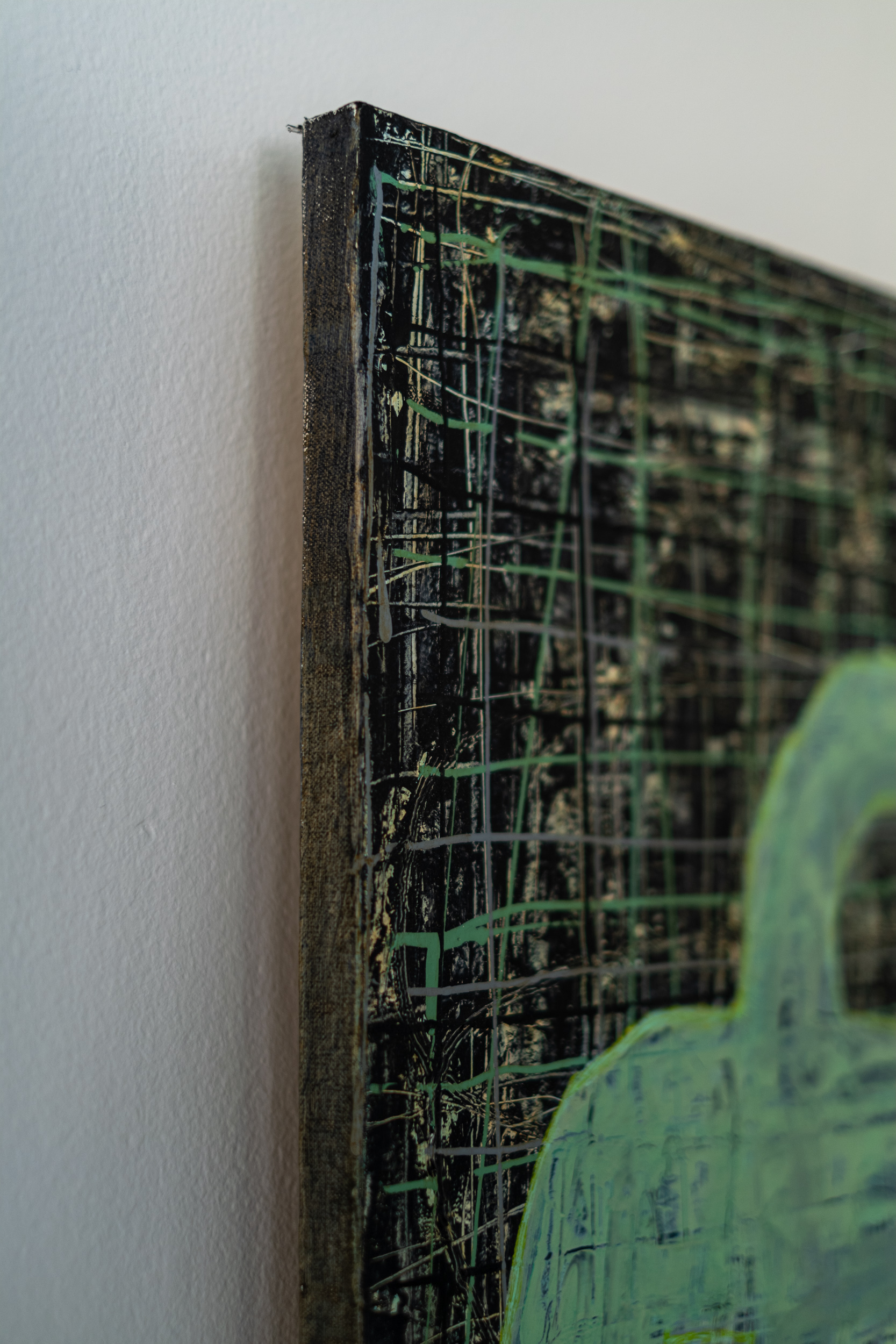
The New Mexico artist has been influenced by modernist abstraction, cubism, and even surrealism. For decades she has explored a distinctive visual language that incorporates mixed media, geometric shapes and architectural elements. Maki has created a body of work devoted to the concept of shaped canvases—a technique that first became a prominent form in the 1960s. This piece is composed of oil paint on a wooden form and canvas. A central lyrical image rendered in teal paint, thickly applied, dominates and overlaps several panels. Each of the four panels works in harmony with one another—three have black backdrops that feature fine grid patterns and dots.
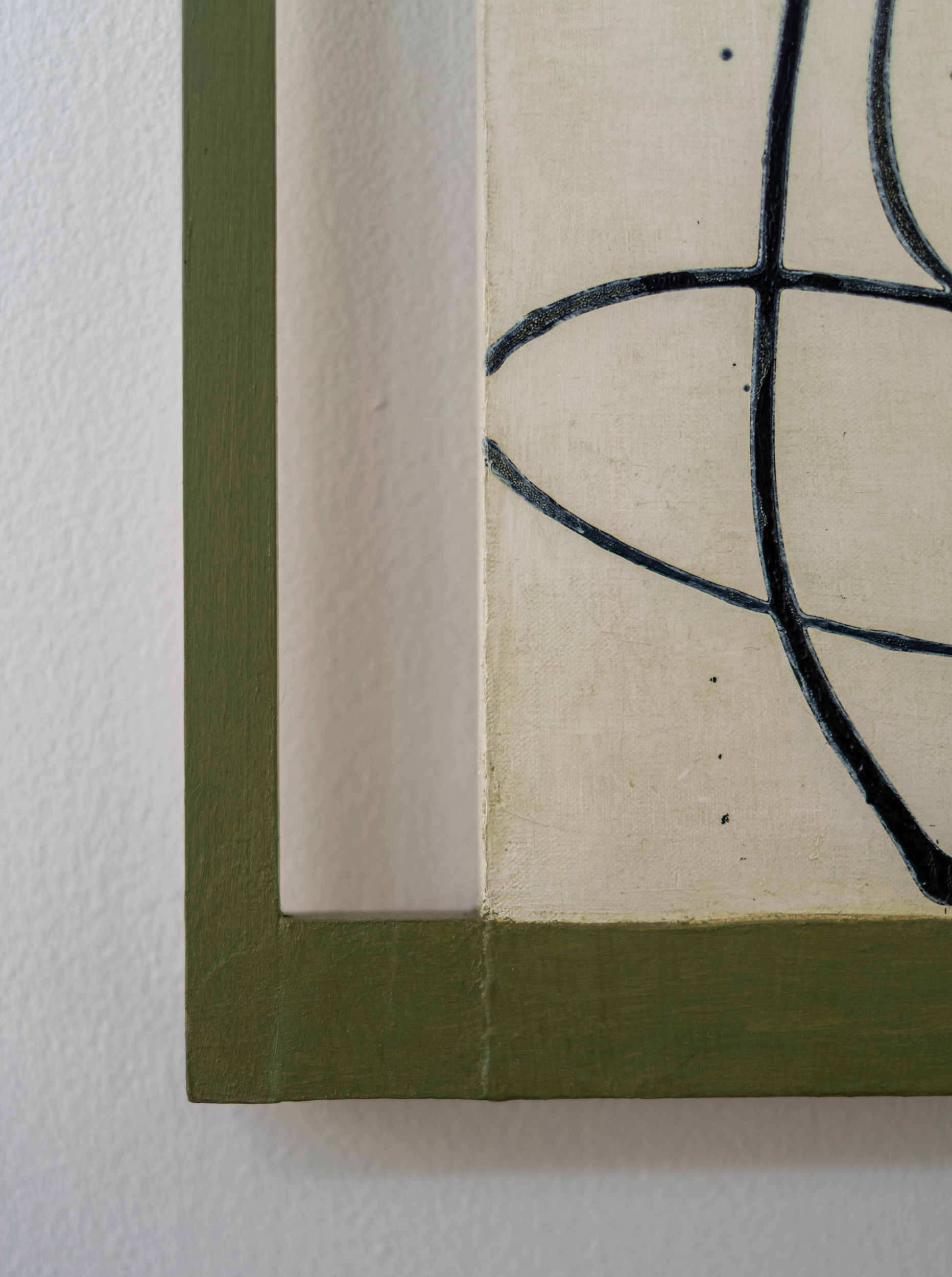
A fourth panel pops from the work as black calligraphic markings appear on a white background. A partial lime green border adds a punch of colour to the mono coloured frame.
“Over the years, a vocabulary of form resulting from a synthesis of styles from twentieth-century modernism and use of materials common to that tradition — paint on canvas, wood, metal, collage- has come to uniquely characterize the work. The one facet or theme that remains constant is that each piece exists as a singular presence, an image object with a distinct “personality” or mood.”
Lucy Maki
“Lucy Maki’s paintings can present themselves like off-kilter hallways or streets in the glance of someone in a hurry to arrive somewhere else. And so it’s magical when the goal disappears from an attentive viewer’s experience as they traverse the space in and around her paintings.” Lyndsay Knecht, Writer, producer
Lucy Maki received her MA and MFA from the University of New Mexico, finishing in 1982. Maki’s artwork has been exhibited internationally--in the US, Mexico and Canada. It can be found in collections at the Albuquerque Museum and the Museum of New Mexico.